
Minnesota’s waiver programs are a common funding source for assisted living and home care providers—but they are also one of the most misunderstood and mismanaged areas in senior care operations.
Many providers believe they “understand” waiver services because they submit claims and receive payment. However, true understanding goes far beyond billing. It requires clarity around authorization, service delivery, documentation, oversight, and compliance—all areas closely scrutinized by counties, managed care organizations (MCOs), and surveyors.
What Are Minnesota Waiver Programs Really?
Waiver programs are designed to support individuals who qualify for Medical Assistance and need services to remain in the community rather than institutional care. Common programs include:
While the funding flows through DHS, authorization, oversight, and monitoring are shared responsibilities among counties, MCOs, and providers. That shared responsibility is where confusion—and risk—often begins.
Common Misunderstandings Providers Have
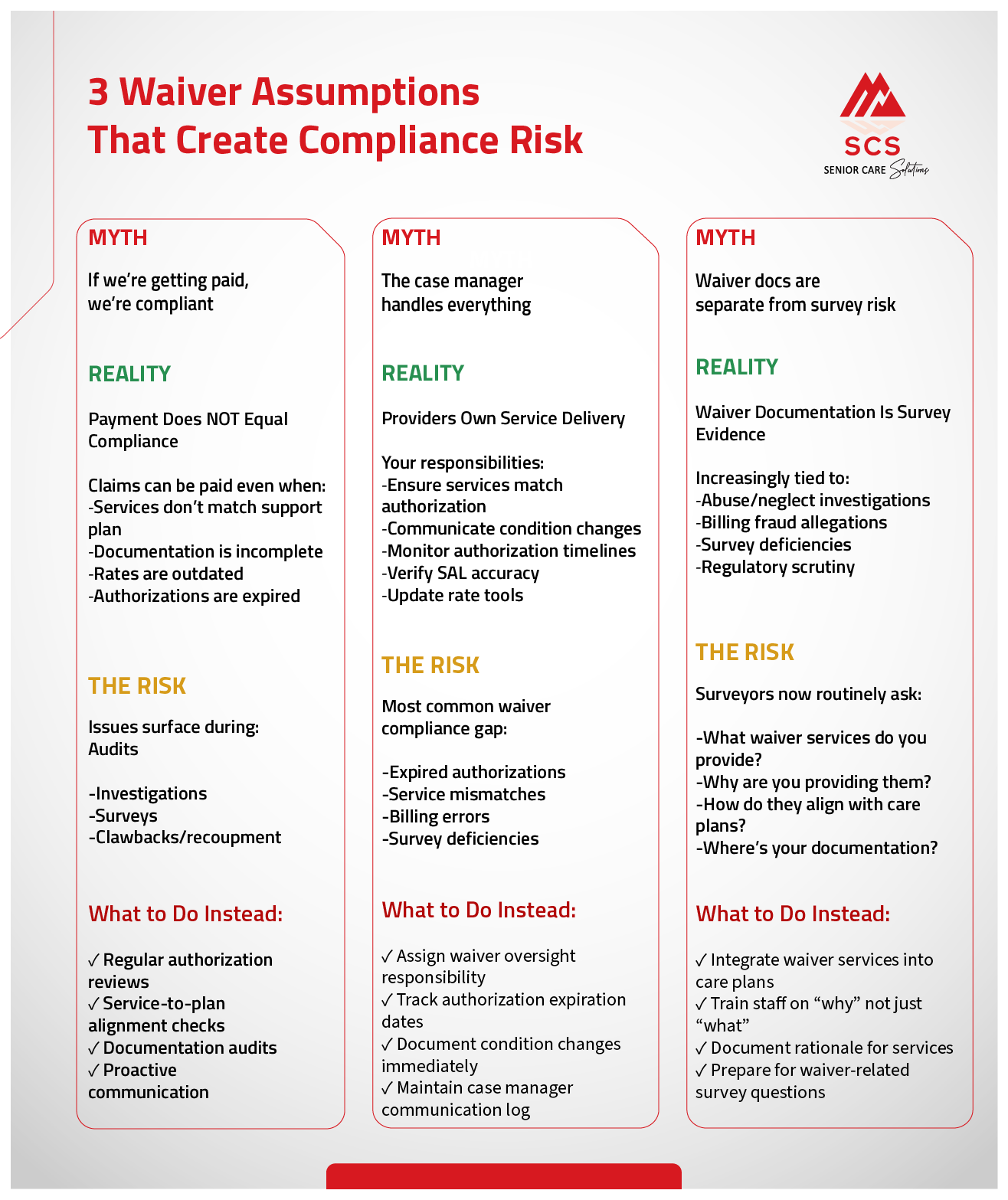
1. “If we’re billing and getting paid, we must be compliant”
Payment does not equal compliance. Claims can be paid even when:
These issues often surface later during audits, investigations, or surveys.
2. “The case manager handles everything”
Case managers authorize services—but providers are responsible for:
Failure to actively manage this relationship is one of the most common waiver compliance gaps.
3. “Waiver documentation is separate from survey risk”
Waiver documentation is increasingly tied to:
Surveyors are asking more waiver-related questions than ever—and they expect staff to understand what they’re providing and why.
What Waiver Program Understanding Looks Like
Facilities with strong waiver oversight can clearly demonstrate:
This level of understanding protects residents, revenue, and licenses.
Why This Matters More Than Ever
Minnesota continues to increase its focus on:
Facilities that lack structured waiver oversight often don’t realize there’s a problem until:
Proactive understanding prevents reactive crisis management.
Final Thought
Waiver programs are not just a billing mechanism—they are a regulated service delivery system. Understanding them requires intention, structure, and ongoing oversight.
If your facility relies on waiver funding, it’s worth asking:
If you’re unsure whether your waiver services are fully aligned with authorizations, documentation, and regulatory expectations, now is the time to take a closer look.
Senior Care Solutions offers specialized consulting on waiver program compliance, including comprehensive assessments of your waiver service delivery, documentation review and improvement, staff training on waiver requirements, HCBS settings compliance evaluation, and billing practice audits. Our team has extensive experience with Minnesota waiver programs and can help you maximize the benefits of participating in these programs while ensuring full compliance. Whether you're new to waivers or seeking to improve existing practices, contact us today for a waiver program compliance assessment and expert guidance.