
The moment state surveyors step through your facility's doors, the clock starts ticking on your survey. What happens in those first critical minutes of the nursing home survey walkthrough can set the tone for the entire inspection process. Understanding what surveyors look for during this initial tour isn't just about passing an inspection—it's about maintaining the quality standards your residents deserve every single day.
The initial walkthrough serves a specific purpose in the survey process. Within the first hour of arrival, surveyors conduct a comprehensive facility tour to form first impressions and identify areas requiring deeper investigation. This isn't a casual stroll—it's a strategic assessment that directly influences the entire survey's scope and direction.
Surveyors simultaneously look for immediate safety concerns, assess cleanliness and maintenance standards, observe staff-resident interactions, note environmental hazards, and identify potential non-compliance with federal regulations outlined in 42 CFR Part 483.
Issues noted during the nursing home survey walkthrough often trigger expanded investigation. Surveyors form initial hypotheses about care quality, and concerns identified lead directly to specific resident record reviews and staff interviews. Throughout the walkthrough, they document everything—photographs, detailed notes, and observations they'll later compare to resident assessments and care plans.
Your facility should maintain survey-ready conditions at all times, not just when expecting surveyors. State surveys can occur any day at any time. The facilities that perform best operate every single day as if surveyors might arrive at any moment.
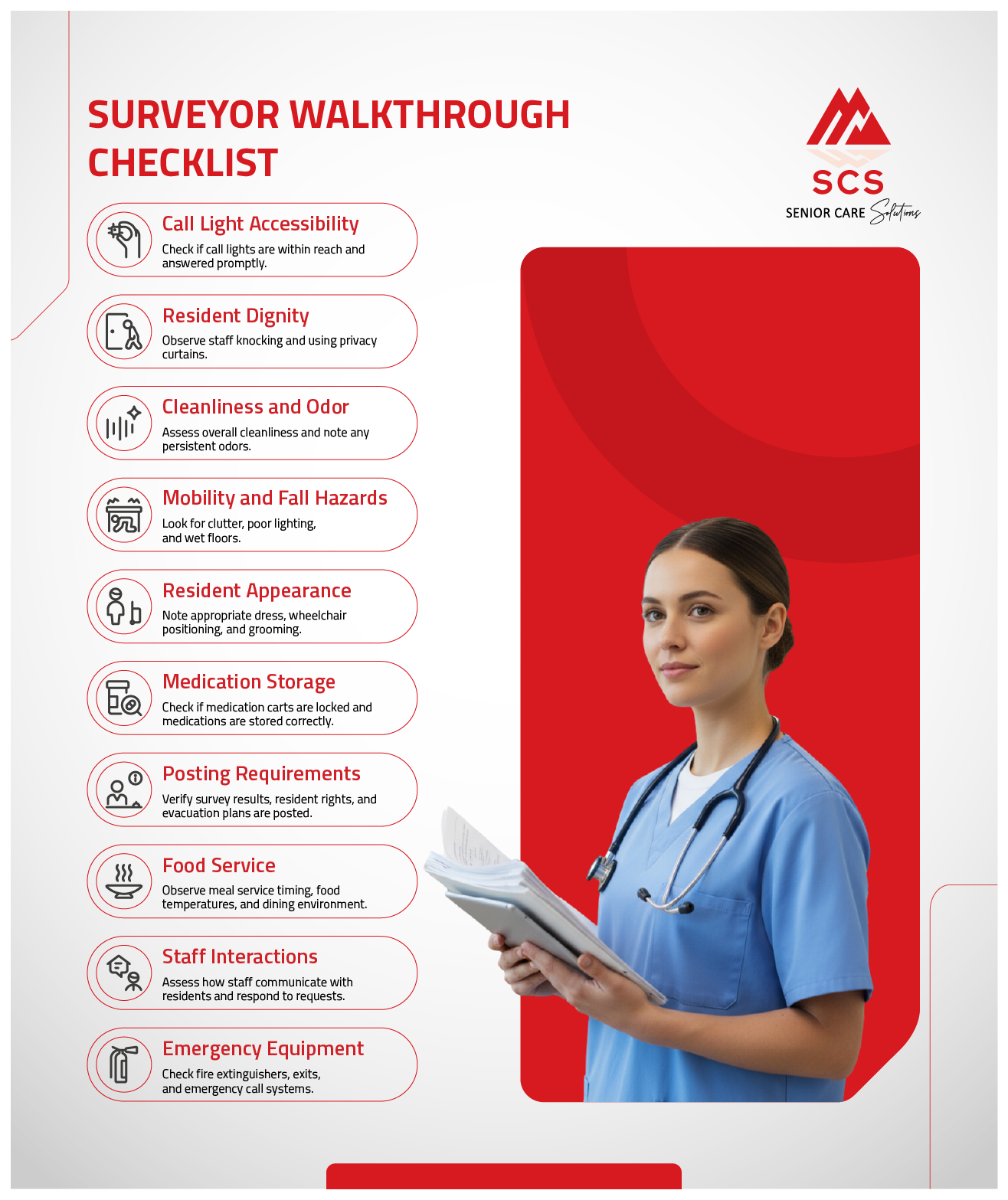
Surveyors pay close attention to call light systems from the moment they enter resident care areas. They check if call lights are within reach of residents in beds and chairs, a fundamental requirement under Quality of Care standards. They observe if call lights are answered promptly, note any that remain unanswered for extended periods, and check if residents can demonstrate how to use the system.
Red flags: Call lights clipped out of resident reach, multiple unanswered call lights, residents unable to demonstrate call system use, or broken/non-functional equipment.
Respect for resident dignity is woven throughout federal requirements, particularly §483.10 Resident Rights. Surveyors observe whether staff knock before entering rooms, check if privacy curtains are used during care, note if residents are appropriately dressed and covered, and assess if conversations maintain dignity and respect.
Red flags: Staff entering without knocking, care provided without privacy curtains, residents exposed in hallways or common areas, or staff discussing personal information where others can overhear.
Overall facility cleanliness provides immediate insight into infection control practices and housekeeping standards. Surveyors assess cleanliness throughout the building while noting any persistent odors. They check housekeeping in resident rooms, bathrooms, and common areas. Persistent odors often trigger deeper investigation into toileting schedules and skin care practices.
Red flags: Persistent odors suggesting inadequate cleaning or infrequent toileting, visible soiling on surfaces, overflowing waste containers, or bathrooms with visible dirt or unsanitary conditions.
Falls represent one of the most common adverse events in nursing homes, so surveyors are acutely attuned to environmental fall hazards during the state survey checklist nursing home walkthrough. They look for clutter in walkways, check that hallways are clear and well-lit, observe if assistive devices are within reach, and assess if spills are addressed promptly.
Red flags: Cluttered corridors blocking safe passage, such as lifts stored on each side of the hallway, poor lighting creating visibility hazards, wet floors without warning signs, or mobility devices stored away from residents who need them.
Resident appearance and positioning tells surveyors volumes about care quality. They note if residents are dressed appropriately for the time of day, check wheelchair positioning for proper body alignment, observe if residents appear clean and groomed, and assess whether residents are engaged or isolated.
Red flags: Multiple residents in nightgowns during afternoon hours, poor wheelchair positioning risking skin breakdown, residents in one position for extended periods, disheveled appearance (Men and women not shaved), or residents sitting alone in hallways without any engagement.
Medication management is governed by strict requirements under §483.45 Pharmacy Services. Surveyors check if medication carts are locked when unattended, observe if medications are stored at proper temperatures, note if controlled substances are secured in double-locked storage, and verify emergency medications are accessible.
Red flags: Unlocked medication carts left unattended, medications left on counters, expired medications visible, refrigerators without temperature monitoring, or controlled substances not in double-locked storage.
Federal regulations require specific information posted in accessible locations. During the nursing home inspection priorities walkthrough, surveyors verify survey results are posted visibly, check that resident rights are posted accessibly, note if evacuation plans are current and visible, and observe if licenses are displayed properly.
Red flags: Outdated or missing survey results, inaccessible resident rights information, faded or outdated evacuation plans, or expired/missing facility licenses.
Nutrition services requirements under §483.60 extend beyond meal preparation to the entire dining experience. Surveyors observe meal service timing and food temperatures, check if residents receive dignified assistance when needed, note if food appears appetizing, and assess if the dining environment supports pleasant mealtimes.
Red flags: Food served at inappropriate temperatures, residents waiting excessively for assistance, unappetizing presentation, chaotic dining environments, residents not being served on table at a time, or residents eating alone without clinical justification.
Staff-resident interactions provide direct insight into facility culture and person-centered care practices required under §483.21. Surveyors observe how staff communicate with residents, note if staff respond to requests promptly, assess if adequate staff are visible and engaged, and check if staff appear knowledgeable about residents.
Red flags: Staff ignoring requests or call lights, dismissive communication, minimal staff presence in care areas, staff unfamiliar with residents' names or needs, or staff speaking about residents as if they weren't present.
Life safety and emergency preparedness are critical components of what surveyors look for during their SNF walkthrough. They check if fire extinguishers are accessible with current inspection tags, verify emergency exits are unobstructed with functioning exit signs, note if emergency call systems work, and observe if oxygen tanks are stored safely.
Red flags: Blocked emergency exits impeding evacuation, expired fire extinguisher inspections, non-functional emergency equipment, unsafe oxygen storage near heat sources, or evacuation routes blocked by equipment.
Preparing Your Facility for Success
Understanding what surveyors look for during the nursing home survey walkthrough is essential, but translating this knowledge into consistent daily practices requires strong leadership, well-trained staff, and robust quality assurance systems.
The facilities that excel during state surveys maintain high standards continuously, empower staff to identify and address concerns immediately, and view compliance as a commitment to resident safety and dignity rather than a burden.
Simple daily practices make a significant difference:
Conduct brief leadership walkthroughs each shift using surveyors' observational lens, empower frontline staff to address the ten items we've discussed, and create systems ensuring call lights stay within reach, privacy is maintained, and environments remain clean and hazard-free.
Surveyors aren't looking for perfection; they're looking for evidence that your facility consistently meets federal requirements designed to protect residents. When you maintain these standards daily, the survey walkthrough becomes simply another day of demonstrating the quality care your residents already receive.
Senior Care Solutions offers comprehensive survey readiness assessments, including mock walkthrough surveys conducted by experienced regulatory experts who think like state surveyors. We can identify potential concerns before surveyors do, train your staff on daily readiness practices, and implement quality assurance systems that maintain compliance standards continuously.
Our team has decades of combined experience in long-term care survey processes, and we understand exactly what catches surveyors' attention during those critical first moments. We'll walk through your facility with the same observational lens that state surveyors use, provide you with a detailed assessment of opportunities for improvement, and work alongside your leadership team to implement sustainable solutions.
Don't wait until you receive a survey notice to discover gaps in your readiness. Contact Senior Care Solutions today or call (651) 955-7175 to schedule a survey readiness assessment. Let us help you ensure your facility makes the best first impression when surveyors arrive, and more importantly, that you're providing the quality care your residents deserve every single day.